使用 SL1000攜帶型水質計測量過氧乙酸 Measuring Peracetic Acid with Hach SL1000
Measuring Peracetic Acid with Hach SL1000 Portable Parallel Analyzer
What is Peracetic Acid? 什麼是過氧乙酸?
Peracetic acid (C₂H₄O₃), also known as peroxyacetic acid or PAA, is produced by a reaction between acetic acid and hydrogen peroxide. PAA is usually produced in concentrations of 5-15% and is a powerful oxidant, more effective than chlorine and chlorine dioxide, and is very soluble in water.
Peracetic acid (C₂H₄O₃), also known as peroxyacetic acid or PAA, is produced by a reaction between acetic acid and hydrogen peroxide. PAA is usually produced in concentrations of 5-15% and is a powerful oxidant, more effective than chlorine and chlorine dioxide, and is very soluble in water.
Application temperature and pH are important in PAA’s effectiveness as a disinfectant. For optimal disinfection, the pH should be kept neutral at 7 and the temperature kept above or around 25°C (room temperature).
Peracetic acid by-products after oxidation are non-toxic (acetic acid, oxygen and water), allowing for high PAA concentration doses for antimicrobial disinfection.
Peracetic acid by-products after oxidation are non-toxic (acetic acid, oxygen and water), allowing for high PAA concentration doses for antimicrobial disinfection.
Peracetic Acid 過氧乙酸(又稱過氧醋酸、過乙酸),由乙酸和過氧化氫反應生成。 PAA通常以5-15%的濃度製備,是一種強氧化劑,其氧化效果優於氯和二氧化氯,且極易溶於水。過氧乙酸氧化後的副產物無毒(乙酸、氧氣和水),此特性得以使用高濃度的 PAA 進行抗菌消毒。
Peracetic Acid Applications 過氧乙酸的應用
Peracetic acid is used for sanitation and sterilization in many food and beverage applications like brewing and winery bottling, fresh produce, dairy/cheese processing, meats, seafood and poultry.
Both the food product and processing equipment can be sanitized with PAA. Other industrial applications include medical facilities, water purification and cooling tower water disinfection, where PAA prevents biofilm formation and effectively controls Legionella bacteria. Peracetic acid also shows potential as a disinfectant for municipal and industrial wastewaters prior to discharge. PAA degrades relatively quickly and does not form toxic disinfection by-products, making it an attractive alternative to chlorine.
Peracetic acid is used for sanitation and sterilization in many food and beverage applications like brewing and winery bottling, fresh produce, dairy/cheese processing, meats, seafood and poultry.
Both the food product and processing equipment can be sanitized with PAA. Other industrial applications include medical facilities, water purification and cooling tower water disinfection, where PAA prevents biofilm formation and effectively controls Legionella bacteria. Peracetic acid also shows potential as a disinfectant for municipal and industrial wastewaters prior to discharge. PAA degrades relatively quickly and does not form toxic disinfection by-products, making it an attractive alternative to chlorine.
過氧乙酸廣泛應用於食品和飲料產業的消毒和滅菌,例如釀酒和葡萄酒裝瓶、新鮮農產品、乳製品/乳酪加工、肉類、海鮮和家禽等。
過氧乙酸可用於食品和加工設備的消毒。其他工業應用包括醫療設施、水淨化和冷卻塔水消毒,在這些應用中,過氧乙酸可防止生物膜形成並有效控制伍軍人桿菌菌。過氧乙酸也具有做為縣市民生汙水和工業廢水排放前消毒劑的潛力。過氧乙酸降解速度相對較快,且不會產生有毒的消毒副產物,使其成為氯的理想替代品。
Measuring Peracetic Acid with the SL1000 Portable Parallel Analyzer 使用 SL1000 攜帶型水質計 測定過氧乙酸
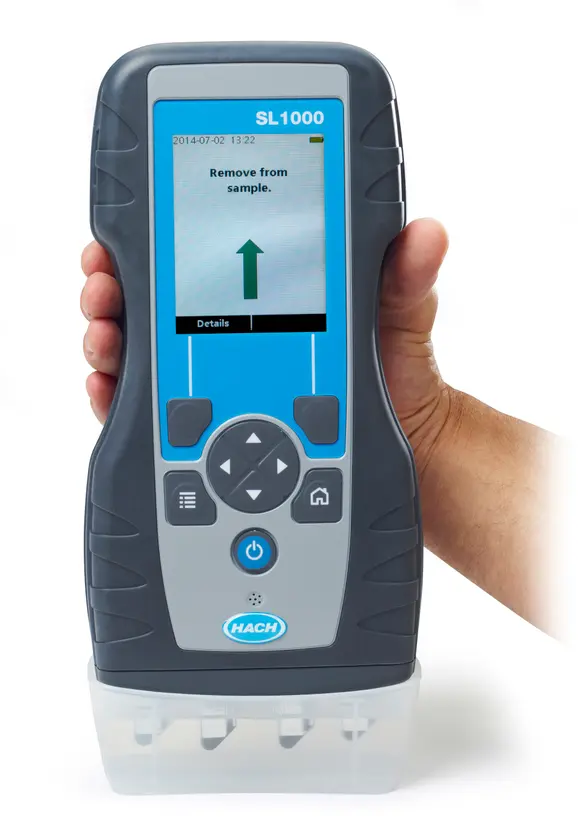
The Hach® SL1000 Portable Parallel Analyzer is a portable automated water analyzer. Colorimetric measurements are conducted simply by inserting the patented Chemkey reagent into the analyzer and dipping into the sample. Micro-doses of analytical reagents are contained inside each Chemkey. Sample is drawn into the Chemkey, mixed and reacted with the reagents, and then measured colorimetrically.
The Hach® SL1000 Portable Parallel Analyzer is a portable automated water analyzer. Colorimetric measurements are conducted simply by inserting the patented Chemkey reagent into the analyzer and dipping into the sample. Micro-doses of analytical reagents are contained inside each Chemkey. Sample is drawn into the Chemkey, mixed and reacted with the reagents, and then measured colorimetrically.
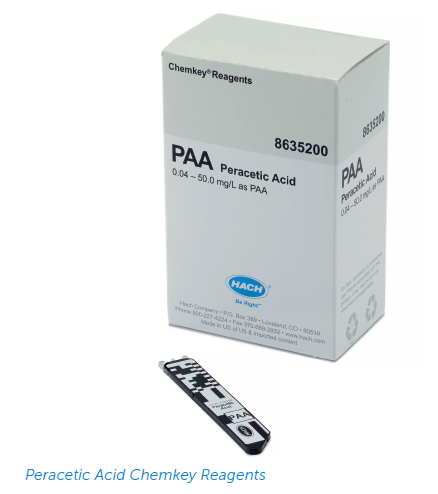
Hach® SL1000 攜帶型水質計採專利設計,使用者只需將專利技術的 Peracetic Acid Chemkey® 試劑片 插入分析儀並浸入樣品中,即可進行比色測量。每個 Chemkey® 內都含有微量分析試劑。水樣被吸入 Chemkey® 中,與試劑混合反應,隨即進行比色測量。
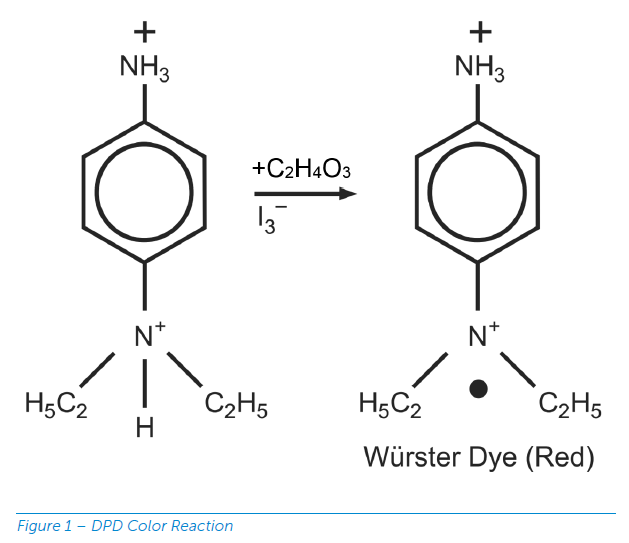
The Hach PAA Chemkey method follows the N,N-diethyl-p-phenylenediamine (DPD) chemistry which is US EPA accepted for measuring total chlorine in drinking and wastewater. PAA rapidly and quantitatively oxidizes iodide ion (I-) into triiodide (I3 -) that reacts with a color indicator (DPD), which turns the solution magenta, Figure 1. The intensity of the magenta color is proportional to the concentration of the PAA.
The SL1000 analyzer contains a colorimeter which has been calibrated to measure the intensity (absorbance) of the magenta color and calculate the result in mg/L of PAA. The calibrated concentration range is 0.04 to 50.0 mg/L PAA. Hydrogen peroxide does not interfere with the PAA analysis due to the quick reaction time.
The SL1000 analyzer contains a colorimeter which has been calibrated to measure the intensity (absorbance) of the magenta color and calculate the result in mg/L of PAA. The calibrated concentration range is 0.04 to 50.0 mg/L PAA. Hydrogen peroxide does not interfere with the PAA analysis due to the quick reaction time.
Hach PAA Chemkey方法採用 N,N-diethyl-p-phenylenediamine(DPD)化學原理,該方法獲得美國環保署認可,可用於測量飲用水和廢水中的總氯濃度。PAA可快速定量地將碘離子(I⁻)氧化為三碘離子(I₃⁻),後者與顯色指示劑(DPD)反應,使溶液變為洋紅色(如圖1)。洋紅色的強度與PAA的濃度成正比。SL1000分析儀內建比色計,校正後可測量洋紅色的強度(吸光度),並以mg/L為單位計算PAA的濃度。校正濃度範圍為0.04至50.0 mg/L。由於反應時間短,過氧化氫不會干擾PAA分析。
Source :